Tramuntana and mistral in Mallorca: where the north wind comes from and what it hits
Wetter Mallorca editorial team · · 3 min read
The tramuntana is the north wind, which according to Wikipedia blows from the north-west in the Balearic Islands and giving the Serra de Tramuntana its name. Its relative, the mistral, comes down the Rhône valley and in France brings sustained winds averaging about 50 km/h, according to Wikipedia. In Mallorca the north wind mainly hits the north-west coast, while the south-facing Bay of Palma lies in its lee.
Tramuntana and mistral: two routes to Mallorca
Tramuntana, according to Wikipedia, is the classical name for the north wind, from the Latin for «beyond the mountains». According to Wikipedia it blows from the north-west in the Balearic Islands, although the Catalan wind rose gives the name tramuntana to the north wind and calls the north-westerly mestral. It is common along the coasts of Catalonia, Mallorca and Menorca and gives the Serra de Tramuntana its name. It forms when cold, high pressure air over the Atlantic or north-west Europe faces a low over the Gulf of Lion. The air flows south and speeds up as it is funnelled between the Pyrenees and the Massif Central.
The mistral, mestral in Catalan, has similar causes but takes the route down the Rhône valley between the Alps and the Massif Central. According to Wikipedia it brings sustained winds averaging about 50 km/h, sometimes up to 100 km/h, most often in winter and spring. Those figures describe the mistral in France, not in Mallorca. It often causes sudden storms between Corsica and the Balearic Islands, and together with the tramuntana it can be felt east of the Balearics.
The Serra as Mallorca's wall and weather divide
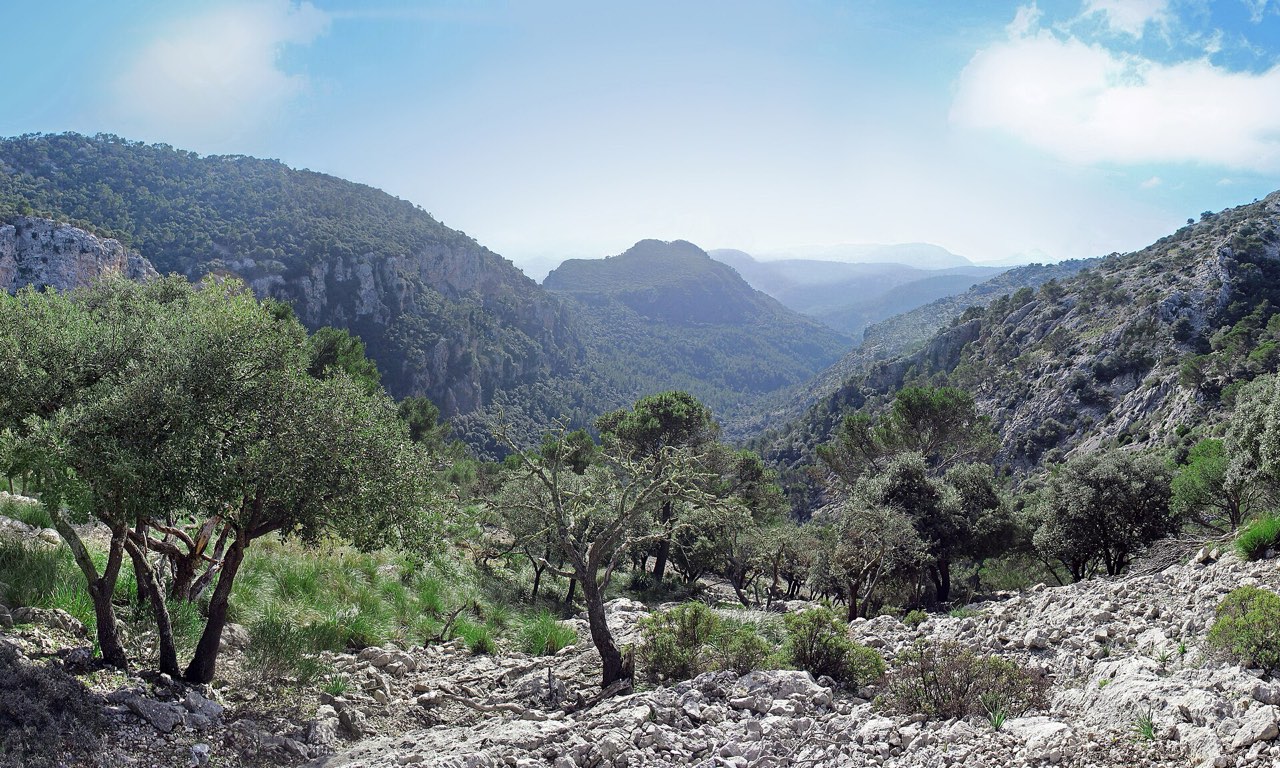
The Serra de Tramuntana, according to Wikipedia, forms the northern backbone of Mallorca. It runs south-west to north-east, parallel to the north-west coast, for more than 90 kilometres (German Wikipedia). That puts it square across a north-westerly wind. The range is far wetter than the rest of the island: up to 1507 mm of rain a year falls in the Serra, against less than 400 mm in other parts of Mallorca. Palma's figures month by month are in the climate table.
Which coast of Mallorca the north wind hits
The picture is clear: a wind from the north to north-west reaches the coasts that face that way first, the cliffs below the Serra and the north coast. The Bay of Palma, according to Wikipedia, lies in the south-west of the island and opens to the sea on its southern side. In a tramuntana the wind there blows from land out to sea, and the waves build up on the other side of the island. More on the weather in the capital on the Palma page.
When AEMET warns on Mallorca's coasts
On Mediterranean coasts AEMET issues a yellow warning from winds of 50 km/h, which is force 7, or waves of 3 m, and orange from 60 km/h or 4 m (Meteoalerta). From 1 May to 30 September the yellow level on Balearic coasts already applies from 40 km/h or waves of 2 m. Advice for strong wind is published by the Balearic 112 emergency service. Active warnings are on the Mallorca weather warnings page.
Frequently asked questions
Where does the tramuntana in Mallorca come from?
From the north-west, according to Wikipedia, although the Catalan wind rose calls the north-westerly mestral. It forms between high pressure over the Atlantic or north-west Europe and a low over the Gulf of Lion, and it gives the Serra de Tramuntana its name.
Is the mistral in Mallorca the same as the tramuntana?
No. According to Wikipedia both have similar causes but follow different routes: the tramuntana between the Pyrenees and the Massif Central, the mistral down the Rhône valley. Together they can be felt east of the Balearic Islands.
Which coast of Mallorca does the north wind hit?
Mainly the coasts that face north and north-west, meaning the cliffs below the Serra de Tramuntana and the north coast. The south-facing Bay of Palma lies on the sheltered side in a north wind.
How much rain falls in the Serra de Tramuntana in Mallorca?
According to Wikipedia up to 1507 mm a year, against less than 400 mm in other parts of Mallorca.
Text written with AI and automatically checked against editorial rules before publication. Figures come from the linked sources. Wetter Mallorca is not an official weather service.