Strong wind in Mallorca: which coast to swim on and what the beach flags mean
Wetter Mallorca editorial team · · 3 min read
As a rule of thumb, in a strong wind the Mallorca coast the wind blows onto from the sea gets the waves, while the far side is sheltered: with a north wind, the Tramuntana, that means the Bay of Palma in the south-west. That does not guarantee calm water, and on the beach the flag decides: red means no swimming, according to 112 Illes Balears. The sea still averages 23.5 °C in October, according to NOAA OISST.
What the winds are called
The traditional Catalan names of the eight winds follow the direction they blow from, according to the compass rose on Wikipedia: Tramuntana from the north, Gregal from the north-east, Llevant from the east, Xaloc from the south-east, Migjorn from the south, Garbí or Llebeig from the south-west, Ponent from the west and Mestral from the north-west. According to Wikipedia, the north wind also blows along Mallorca's coasts and gives the Serra de Tramuntana its name. Knowing the direction lets you choose the coast.
Which coast for which wind
The rule of thumb, which will not hold for every cove: the coast the wind hits from the open sea gets the waves. The coast it blows away from, out to sea, is sheltered and has calmer water close to shore. For Mallorca, roughly:
- Tramuntana or Gregal (north, north-east): the Bay of Palma lies in the south-west of the island, according to Wikipedia, so on the sheltered side.
- Migjorn or Xaloc (south, south-east): now the Bay of Palma faces the wind. Alcúdia lies in the north of the island on the east coast, according to Wikipedia, so it is on the sheltered side when the Migjorn blows.
- Llevant (east): Cala Millor is on the east coast, according to Wikipedia, and takes this wind straight off the sea.
Sheltered does not mean risk-free
An offshore wind pushes anything that floats out to open sea. The 112 Illes Balears emergency service advises not drifting far from shore on lilos and similar inflatables, and watching out for currents. What applies on a given beach is shown by the flag:
- Red: swimming is completely banned.
- Yellow: swim only with caution, there is a danger.
- Green: swimming is allowed.
- Orange: no lifeguard on duty.
The flag applies whatever the rule of thumb above suggests.
When AEMET issues a storm warning
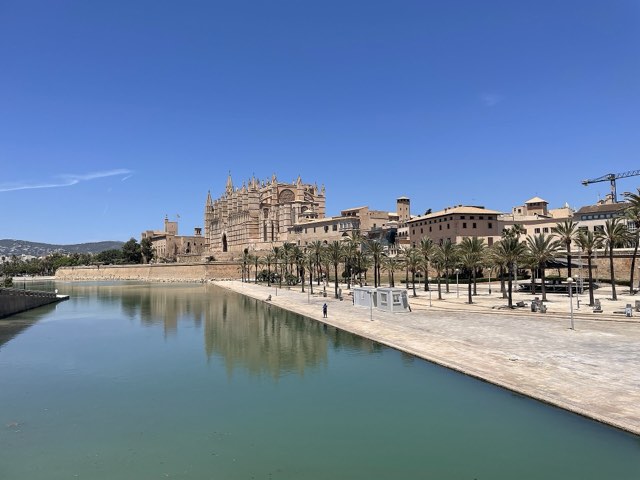
In strong wind, the 112 advises keeping away from promenades, breakwaters and cliffs, because the force of the water can sweep people away, and avoiding water sports. If the sea is off, a plan on land in Palma remains. Current AEMET warnings for the Mallorca coast are on the weather warnings page.
How warm the water is
Whether a swim is worth it depends on more than the wind. According to NOAA OISST, the open sea off the Bay of Palma averages 18.9 °C in May, 22.7 °C in June, 26.9 °C in August and 23.5 °C in October. These are averages, not a forecast. Every month is on the sea temperature page.
Activities that fit


Affiliate links: if you book through these links, Wetter Mallorca earns a commission at no extra cost to you.
Frequently asked questions
Where should you swim in Mallorca when the Tramuntana blows?
As a rule of thumb, on the sheltered side, such as the Bay of Palma in the south-west of the island. On the beach the flag decides, and red means no swimming, according to 112 Illes Balears.
What does a yellow flag mean on Mallorca's beaches?
Swim only with caution, because there is a danger, according to 112 Illes Balears. Red means completely banned, green allowed, orange no lifeguard.
Where does the Serra de Tramuntana in Mallorca get its name?
From the Tramuntana, the north wind, according to Wikipedia. The Catalan compass rose lists it as the wind from the north.
How warm is the sea in Mallorca in October?
On average 23.5 °C off the Bay of Palma, according to NOAA OISST. That is warmer than June at 22.7 °C.
Text written with AI and automatically checked against editorial rules before publication. Figures come from the linked sources. Wetter Mallorca is not an official weather service.